First Aid for the USMLE Step 1 2025
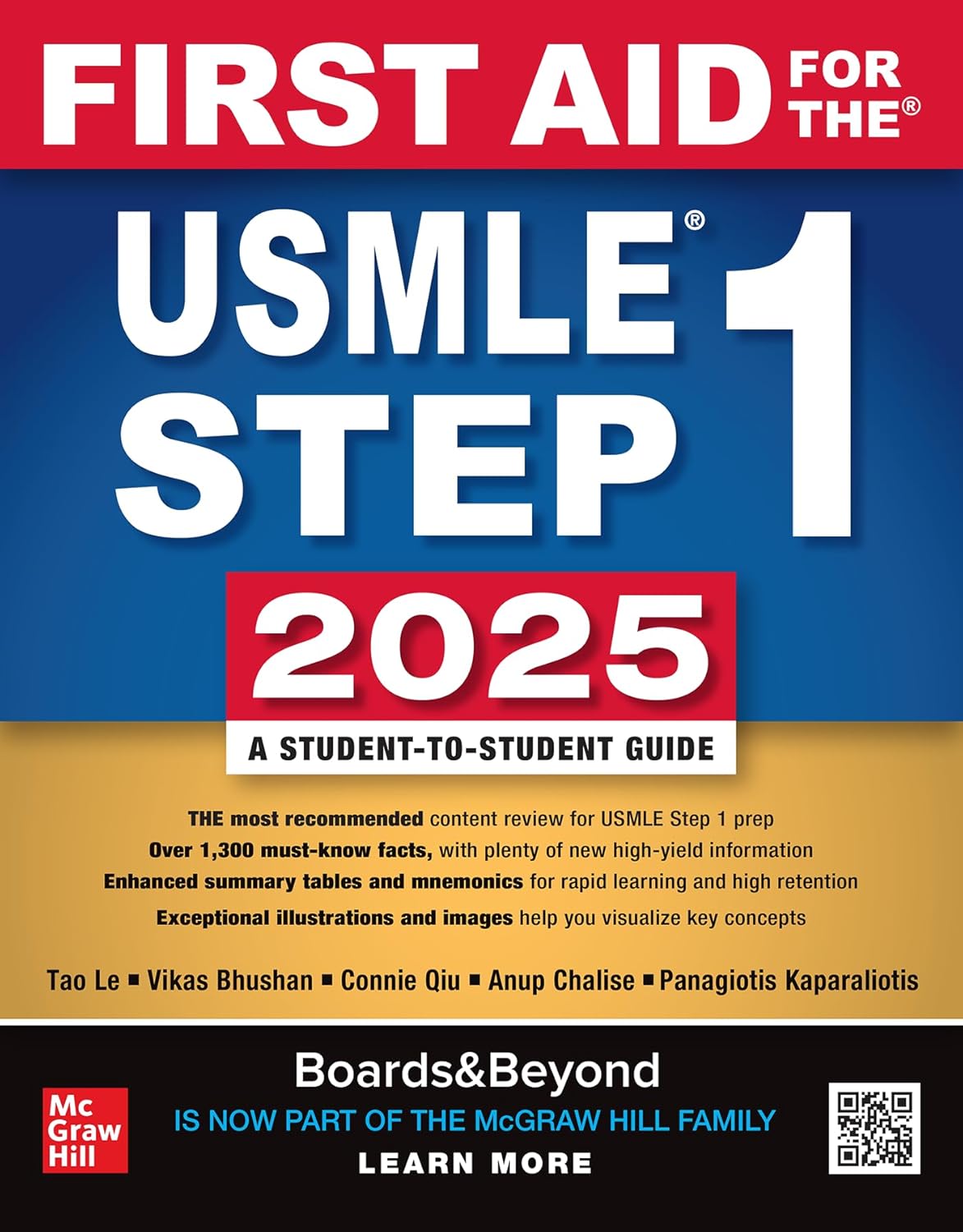
Preparing for the First Aid for the USMLE Step 1 2025 Exam can be a daunting task, but with the right resources, it becomes manageable. The 2025 edition of the First Aid guide is one such resource that has been a cornerstone for medical students.

First Aid for the USMLE Step 1 2025
This comprehensive guide is designed to aid in USMLE Step 1 preparation, providing detailed information on a wide range of topics relevant to the exam. Its relevance to medical students cannot be overstated, as it helps streamline study materials and focus on high-yield information.
Key Takeaways
- The First Aid for the USMLE Step 1 2025 of the guide is updated with the latest information relevant to the USMLE Step 1 exam.
- It serves as a comprehensive resource for medical students preparing for the exam.
- The guide helps in streamlining study materials and focusing on high-yield information.
- It is designed to be a primary study resource for USMLE Step 1 preparation.
- The guide is highly regarded among medical students for its clarity and effectiveness.
The Evolution of USMLE Step 1 Preparation
As medical education advances, so too has the approach to USMLE Step 1 preparation. The exam is a critical milestone for medical students, and its preparation has become more sophisticated over time.
Understanding the current landscape of USMLE Step 1 preparation is essential for success.
Understanding the USMLE Step 1 Exam Format
The USMLE Step 1 exam is a comprehensive, multiple-choice exam that tests a student’s understanding of the basic sciences. It includes subjects like anatomy, biochemistry, and pharmacology.
The exam format is designed to assess a student’s ability to apply their knowledge in a clinical context. Familiarity with the exam format is crucial for effective preparation.
Why Proper Study Materials Matter
Proper study materials are the cornerstone of a successful USMLE Step 1 study plan. High-quality resources, such as First Aid for the USMLE Step 1, provide comprehensive coverage of the exam material.
These materials help students understand complex concepts, retain information, and practice with relevant questions. Investing in the right study materials can significantly impact a student’s performance on the exam.
First Aid for the USMLE Step 1 2025: The Definitive Guide
For medical students preparing for the USMLE Step 1, the choice of study materials is crucial, and ‘First Aid for the USMLE Step 1 2025’ remains a top contender. This guide has been a trusted companion for many students, offering comprehensive coverage of the exam material.
Legacy and Reputation of First Aid
‘First Aid for the USMLE Step 1’ has a long-standing reputation for excellence. Its legacy is built on providing high-quality, accurate, and relevant study material that has helped numerous students pass the USMLE Step 1 exam. The guide is known for its concise yet detailed explanations, making complex concepts more manageable.
The reputation of ‘First Aid’ is further enhanced by its annual updates, ensuring that the content remains current with the latest exam trends and changes. This commitment to staying up-to-date has earned it a loyal following among medical students.
| Year | Edition | Notable Updates |
| 2023 | 23rd Edition | Revised pharmacology section |
| 2024 | 24th Edition | Enhanced pathology coverage |
| 2025 | 25th Edition | Updated immunology and microbiology sections |
Authors and Expert Contributors
The ‘First Aid for the USMLE Step 1 2025’ guide is authored by a team of experienced medical professionals and educators. These experts bring their knowledge and teaching expertise to the guide, ensuring that the content is not only accurate but also presented in a way that is easy for students to understand.
The contributors to ‘First Aid’ are also noteworthy, comprising a diverse group of medical students, residents, and faculty members who provide valuable insights and feedback. This collaborative approach helps to ensure that the guide remains relevant and effective for its target audience.
What’s New in the 2025 Edition
With the release of the 2025 edition, First Aid continues to evolve, offering students the most comprehensive and up-to-date study materials for the USMLE Step 1. This latest version is packed with significant updates that enhance the learning experience.
Content Updates and Corrections
The 2025 edition of First Aid has undergone rigorous content updates and corrections to reflect the latest medical knowledge and exam trends. Key updates include:
High-Yield Facts and Concept Updates
- New High-Yield Facts: Incorporation of the latest research and clinical guidelines to ensure students are well-prepared for the exam.
- Concept Updates: Revisions to existing concepts to align with current medical practices and understanding.
Removed and Consolidated Content
To maintain focus and efficiency, some content has been removed or consolidated. This includes:
- Outdated information that no longer aligns with current medical practices.
- Redundant sections that have been merged with other relevant chapters.
Enhanced Visual Learning Tools
The 2025 edition boasts enhanced visual learning tools designed to improve comprehension and retention. These include:
- Improved Illustrations: New and revised diagrams that clarify complex concepts.
- Tables and Charts: Updated and additional tables that summarize key information for quick review.
Digital Integration Features
First Aid 2025 seamlessly integrates with digital study tools, enhancing the overall study experience. Key features include:
- Online Access: Digital version of the book for flexible studying on-the-go.
- Interactive Quizzes: Integrated quizzes that help reinforce learning and identify areas for improvement.
These updates and new features in the 2025 edition of First Aid for the USMLE Step 1 underscore the commitment to providing students with the best possible resources for exam success.
Comprehensive Content Breakdown
Understanding the comprehensive content of First Aid is crucial for a successful USMLE Step 1 study plan. The 2025 edition is meticulously organized to cover all necessary topics in a structured manner.
General Principles Section
The General Principles section lays the foundation for understanding the complex concepts encountered in the USMLE Step 1. It encompasses fundamental principles in various disciplines.
Biochemistry and Molecular Biology
Biochemistry and Molecular Biology are crucial for understanding the biochemical processes and molecular mechanisms that underlie various physiological and pathological conditions.
Immunology and Microbiology
Immunology and Microbiology are vital for comprehending the body’s immune response and the pathogenesis of infectious diseases.
Organ Systems Approach
The Organ Systems approach in First Aid allows for a systematic study of the human body’s systems. This section is particularly useful for integrating knowledge from various disciplines.
Cardiovascular and Respiratory Systems
The Cardiovascular and Respiratory Systems are critical for understanding the circulation of blood and the process of respiration, both of which are essential for overall health.
Neurology and Behavioral Sciences
Neurology and Behavioral Sciences cover the nervous system’s structure and function, as well as the psychological aspects of human behavior.
Pathology and Pharmacology Integration
The integration of Pathology and Pharmacology is essential for understanding disease processes and the effects of various therapeutic agents.
To illustrate the comprehensive nature of First Aid, consider the following table that summarizes key topics covered:
| Section | Key Topics |
| General Principles | Biochemistry, Molecular Biology, Immunology, Microbiology |
| Organ Systems | Cardiovascular, Respiratory, Neurology, Behavioral Sciences |
| Pathology and Pharmacology | Disease processes, Therapeutic agents, Pharmacodynamics |

USMLE Step 1 study plan
Strategic Study Planning with First Aid
Acing the USMLE Step 1 requires more than just knowledge; it demands a strategic study plan. First Aid for the USMLE Step 1 2025 is a comprehensive guide that can be the cornerstone of your preparation. By leveraging its detailed content and structured approach, you can create an effective study plan tailored to your needs.
6-Month Study Timeline
A 6-month study plan allows for a relaxed yet thorough preparation. Start by dedicating 2-3 hours daily to studying, gradually increasing to 4-6 hours as the exam approaches.
- Month 1-2: Cover general principles and basic sciences.
- Month 3-4: Focus on organ systems and pathology.
- Month 5: Integrate pharmacology and review high-yield topics.
- Month 6: Intensive practice with question banks and final review.
3-Month Intensive Schedule
For those with a shorter preparation time, a 3-month intensive schedule can be effective. This plan requires a significant commitment, with 6-8 hours of study each day.
| Month | Focus | Study Hours |
| 1 | General Principles and Basic Sciences | 6-8 hours/day |
| 2 | Organ Systems, Pathology, and Pharmacology | 6-8 hours/day |
| 3 | High-Yield Topics, Practice Questions, and Review | 8 hours/day |
Last-Month Review Strategy
In the final month, focus on reinforcing your knowledge and practicing with real questions. Use First Aid to review high-yield sections and practice with online question banks.
By following these study plans and utilizing First Aid effectively, you can enhance your preparation and boost your confidence for the USMLE Step 1 exam.
Maximizing Your Learning Experience
Effective learning with First Aid isn’t just about reading through the content; it’s about engaging with it actively. To achieve success in the USMLE Step 1, you need to employ strategies that enhance retention and recall.
Effective Annotation Techniques
Annotation is a powerful tool for engaging with study material. By highlighting key points, you can create a personalized version of First Aid that focuses on your weak areas. Effective annotation involves more than just highlighting; it includes summarizing key concepts in your own words and creating a key to your annotations for easy reference.
Active Recall Methods
Active recall is a proven learning strategy that involves actively recalling information from memory rather than simply re-reading it. Techniques include creating flashcards, taking practice quizzes, and summarizing notes in your own words. Active recall strengthens your ability to recall information under exam conditions.
“The more you practice recalling information, the more likely you are to remember it during the exam.”
Spaced Repetition Implementation
Spaced repetition is a learning technique that involves reviewing material at increasingly longer intervals to help solidify it in your long-term memory. By implementing spaced repetition, you can optimize your study schedule to maximize retention. A table outlining a basic spaced repetition schedule is shown below:
| Day | Material to Review |
| 1 | Initial Study |
| 3 | First Review |
| 7 | Second Review |
| 14 | Third Review |
By incorporating these strategies into your study routine, you can maximize your learning experience with First Aid and improve your chances of success on the USMLE Step 1.
Supplementary Resources and Integration
While ‘First Aid for the USMLE Step 1 2025’ is a cornerstone of study materials, supplementary resources can significantly enhance your preparation. Integrating a variety of study tools can help ensure comprehensive coverage of the exam content and improve your overall performance.
Question Banks and Their Synergy with First Aid
Question banks are a crucial supplement to ‘First Aid,’ offering practice questions that help reinforce knowledge and identify areas for improvement. Effective integration of question banks with ‘First Aid’ can significantly boost your study efficiency.
UWorld Integration
UWorld is one of the most popular question banks used by USMLE Step 1 candidates. Its extensive question bank and detailed explanations complement ‘First Aid’ well. By using UWorld alongside ‘First Aid,’ you can reinforce your understanding of key concepts and improve your test-taking skills.
AMBOSS and Other QBanks
AMBOSS is another valuable resource that offers a comprehensive question bank with adaptive learning technology. Other question banks like Kaplan Qbank and NBME Practice Exams also provide high-quality practice questions. Integrating these resources with ‘First Aid’ can help you assess your knowledge and identify weak areas.
Video Resources and Lecture Series
Video lectures and online courses can provide in-depth explanations and visual learning experiences that complement ‘First Aid.’ Resources like Pathoma and Physeo offer video lectures that cover complex topics in an engaging and accessible way. Incorporating these into your study plan can enhance your understanding of difficult subjects.
Flashcard Systems and Memory Tools
Flashcards are a traditional yet effective tool for memorization. Apps like Anki allow you to create digital flashcards with spaced repetition, making it easier to retain information. By integrating flashcards with your study of ‘First Aid,’ you can reinforce key facts and concepts.
Comparing the 2025 Edition to Previous Versions
The 2025 edition of “First Aid for the USMLE Step 1” brings significant updates that are crucial for students preparing for the exam. As we explore the changes and enhancements in this latest version, it’s essential to understand how it compares to its predecessors.
Major Changes from 2024 Edition
The 2025 edition has seen substantial revisions in content, reflecting the latest developments in medical education and exam patterns. Some of the key updates include:
- Updated high-yield information to reflect the latest exam trends
- Enhanced visual learning tools, including new diagrams and illustrations
- Improved digital integration features for a more seamless study experience
To illustrate the changes, let’s look at a comparison table:
| Feature | 2024 Edition | 2025 Edition |
| High-Yield Information | Coverage of major topics | Updated with latest exam trends |
| Visual Learning Tools | Diagrams and illustrations | Enhanced with new diagrams and more detailed illustrations |
| Digital Integration | Basic online access | Advanced digital features, including interactive quizzes |

First Aid 2025 comparison
Worth the Upgrade? Analysis for Previous Edition Owners
For those who own the 2024 edition, the decision to upgrade depends on several factors. If you’re looking for the most current information and enhanced study tools, the 2025 edition is definitely worth considering. The updates in visual learning and digital integration can significantly enhance your study experience.
However, if you’re on a tight budget or have already begun your study plan with the 2024 edition, you might not need to upgrade immediately. Assess your study needs and decide based on how crucial the new features are to your preparation.
Success Stories and Proven Strategies
The journey to acing the USMLE Step 1 is filled with challenges, but with the right resources and strategies, many students have achieved remarkable success. This section highlights the experiences of top performers and provides insights into effective study strategies.
How Top Performers Utilized First Aid
Top performers often attribute their success to a combination of high-quality study materials and effective learning strategies. First Aid for the USMLE Step 1 2025 has been a crucial resource for many, offering comprehensive coverage of the exam content. By leveraging its detailed explanations and high-yield information, students can focus their study efforts efficiently.
Effective use of First Aid involves annotating key points, creating concept maps, and regularly reviewing high-yield topics. Many successful students also supplement their study with practice questions and other resources to reinforce their understanding.
Common Mistakes to Avoid
While utilizing the right resources is crucial, avoiding common pitfalls is equally important. One of the most significant mistakes is not starting early enough, leading to a rushed study schedule that can negatively impact retention and understanding. Another mistake is failing to integrate practice questions into their study routine, which is essential for assessing knowledge and identifying areas for improvement.
Additionally, not reviewing and adjusting study plans based on performance can lead to inefficiencies. Top performers often adapt their strategies based on feedback from practice exams and assessments, ensuring they stay on track to achieve their goals.
Conclusion: Your Roadmap to USMLE Step 1 Success
As you embark on your USMLE Step 1 preparation journey, having the right resources is crucial. The First Aid guide has been a cornerstone for many students, providing a comprehensive and structured approach to mastering the exam content.
By leveraging the First Aid guide effectively, you can streamline your study process, focusing on high-yield topics and reinforcing your understanding through active recall and spaced repetition.
To maximize your success, integrate the First Aid guide with other study materials, such as question banks and video resources, to create a robust study plan. Stay committed, and with persistence and the right strategy, you’ll be well on your way to achieving a high score on the USMLE Step 1.
Begin your preparation with confidence, using the First Aid guide as your roadmap to success.